Stop Wasting Application Fees: The IMG Playbook for Finding Programs That Actually Say Yes
Every application season, thousands of international medical graduates (IMGs) spend hundreds of dollars on applications to programs that were never going to interview them. The difference between an IMG who matches and one who doesn’t often comes down to strategy rather than talent. The good news is that “IMG-friendly” can be verified with the right research habits.
Start With the Roster
A program’s website is one of your most honest sources. Open the current resident list and look at where residents earned their medical degrees. If several residents across different class years graduated from international schools, that program has a track record of welcoming IMGs. If you see one IMG in a decade, treat it as a warning sign, however welcoming the program’s language sounds.
Consistency matters more than any single year. A pattern across multiple classes tells you far more than one lucky match.
Let the Databases Do the Heavy Lifting
Two tools deserve a place in your workflow:
- FREIDA, the AMA’s residency database, lets you filter programs and see the percentage of IMGs in each one.
- AAMC Residency Explorer offers additional data to help you compare programs and understand where you fit.
Use them to build a first-pass list, then confirm what you find on each program’s own website. Databases can lag behind, and programs change their preferences.
Confirm Visa Sponsorship Before Anything Else
If you need visa sponsorship, this step comes first. Check whether the program sponsors J-1 visas, H-1B visas, or both. Many programs sponsor only one type, and some sponsor neither. Applying to a program that cannot sponsor your visa wastes an application fee and a spot on your list. Check the program’s website and, if it’s unclear, email the program coordinator directly.
Read the Fine Print on Filters and Cutoffs
Some programs state their requirements openly, and others apply them quietly through screening filters. Look closely at: Some programs state their requirements openly, and others apply them quietly through screening filters. Look closely at:
- Year of graduation (YOG) limits. Many programs prefer graduates within a certain number of years of finishing medical school, often around three to five.
- USMLE score expectations. Some programs publish minimums. Others don’t, but their resident profiles hint at where the bar sits.
- Exam attempt policies and any required U.S. clinical experience.
If you fall outside a program’s stated or apparent limits, look at it critically. Your list is stronger when every entry is a realistic possibility.
Consider Specialty and Geography
Some specialties have historically matched more IMGs, including Internal Medicine, Family Medicine, Pediatrics, and Pathology. This doesn’t mean you should abandon a competitive specialty you love, but it should shape how broad your list is and whether you need a backup plan.
Geography matters as well. States with large numbers of residency positions, such as New York, Florida, and Texas, tend to offer more opportunities for IMGs. Programs in these regions are often more familiar with the IMG pathway and its paperwork.
Build a List With Layers
Rather than applying broadly and hoping, sort your programs into tiers:
- Reach programs where your profile is a stretch.
- Realistic programs where your scores, graduation year, and visa needs match their history.
- Safety programs with a strong record of matching IMGs like you.
A layered list gives you the best chance of interviews while keeping your costs under control.
Strengthen the Profile Programs Are Looking At
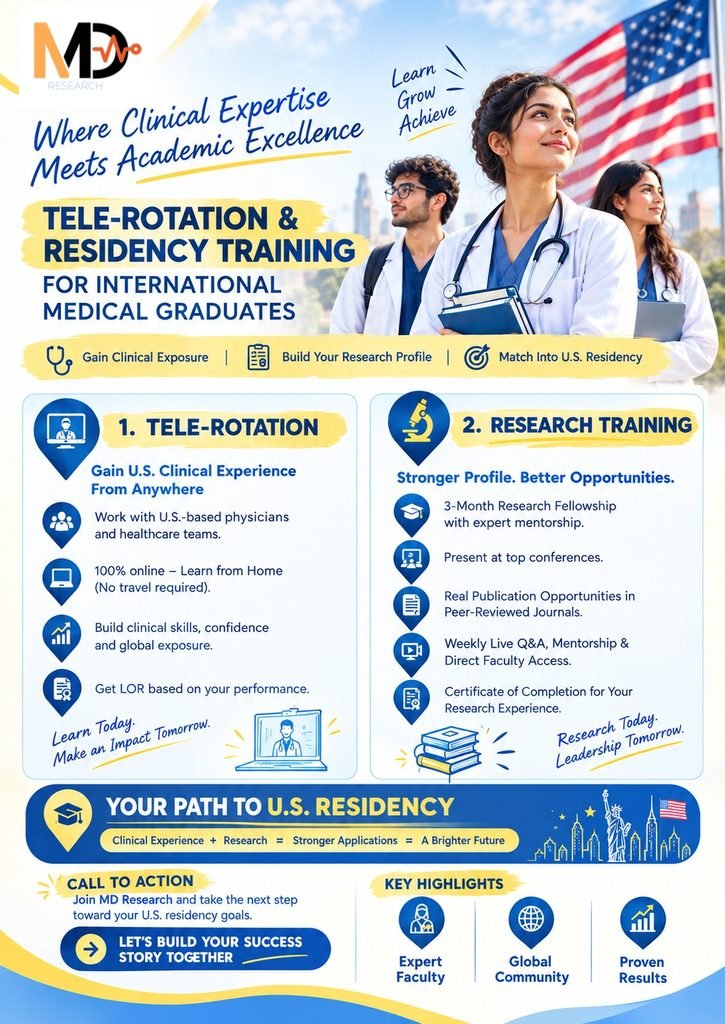
Even a perfectly researched list won’t help if your application doesn’t stand out. Program directors reviewing IMG applications often look for evidence of commitment to the U.S. system: clinical experience, strong letters of recommendation, and research. Research in particular can set you apart, since it shows initiative, analytical skill, and familiarity with academic medicine. If you’re looking to build that part of your profile, mdresearch.us offers research opportunities and training designed to help medical graduates develop their research experience and present a stronger application.
The Bottom Line
Finding IMG-friendly programs takes investigation. Study the rosters, use the databases, verify visa policies, respect the filters, and build a layered list. Then give every application the strongest profile you can. A smart, well-researched list will do more for your match than a long one.