
Residency Preparation: The Essential Steps to Start a Strong
Residency Journey
Week 1 : History Taking & Clinical Examination
-
- How to do Patient-centered communication typical of American Medicine.
- Building rapport and trust to get most information.
- Structuring the interview: Chief complaint, history of present illness, past medical history, family history, social history, and review of systems.
- Handling sensitive topics with professionalism based on American Guidelines.
- Open-ended vs. closed-ended questions.
- Listening and observing non-verbal cues.
- Usinging medical terminology.
- General physical examination principles.
- Systematic examination approach: Head-to-toe and focused examinations.
- Recognizing normal vs. abnormal findings.
- Practicing with Virtual Patient.
- Immediate feedback on communication and examination techniques that will also help in CK (USMLE II)
Duration :
1 Week as per Structured Procedure
Focus :
Clinical Communication and Examination
Standard :
American Clinical Guidelines
Exam Relevance
USMLE Step 2 CK
Week 2 : Bedside and Clinical Case Presentation
-
- Patient demographics and chief complaint.
- Summary of history and clinical findings.
- Differential diagnoses.
- Investigations and management plan
- Clarity and conciseness.
- Engaging and logical flow.
- Use of visual aids and handouts.
- Interacting with patients during rounds.
- Presenting findings with empathy and professionalism.
- Encouraging discussion and input from team members.
- Addressing questions and feedback during presentations
Duration :
1 Week as per Structured Procedure
Focus :
Bedside Case Presentation and Clinical Communication
Standard :
American Clinical Presentation and Bedside Teaching Guidelines
Exam Relevance
USMLE Step 2 CK Clinical Case Presentation Skills
Week 3 : Journal Club Activities
-
- Staying updated with the latest medical research.
- Critical appraisal of research articles.
- Enhancing evidence-based practice skills.
- Selecting relevant and high-quality articles.
- Summarizing key findings and methodology.
- Identifying strengths, weaknesses, and implications of the study.
- Structuring the presentation: Background, methods, results, discussion, and conclusion.
- Engaging the audience with discussion questions.
- Constructively critiquing peers’ presentations.
- Incorporating feedback for improvement
Duration :
1 Week as per Structured Procedure
Focus :
Journal Appraisal & Presentation
Standard :
Evidence-Based Medicine & Research Critique
Exam Relevance:
USMLE Step 2 CK Formulating and Appraising Research
Week 4 : Writing Patient Notes- At Bedside & in Clinic
-
- Subjective: Patient’s complaints and history.
- Objective: Clinical findings and investigations.
- Assessment: Diagnosis and differential diagnoses.
- Plan: Treatment and follow-up plan.
- Maintaining accuracy and clarity.
- Avoiding biases and ensuring professionalism.
- Abiding by legal and ethical standards in documentation.
- Translating clinical examination findings into written notes.
- Using templates and tools like SOAP (Subjective, Objective, Assessment, Plan).
- Writing notes in real-time during bedside visits.
- Reviewing and refining notes with faculty feedback.
Duration :
1 Week as per Structured Procedure
Focus :
Note - Taking Skills & Documentation
Standard :
Clinical Not- Taking and Documentation Guidelines
Exam Relevance:
USMLE Step 2 Ck Patient Note & Communication Skills
● Virtual Telerotation Program
Start Your Virtual Telerotation Program — Build the Clinical Skills U.S. Residency Programs Look For
This virtual telerotation program is designed to provide international medical graduates and medical students with essential clinical exposure and skills to strengthen their U.S. residency applications.
SELECT A MODULE
Week 1 : History Taking & Clinical Examination
Principles of Effective History Taking
- How to do Patient-centered communication typical of American Medicine.
- Building rapport and trust to get most information.
- Structuring the interview: Chief complaint, history of present illness, past medical history, family history, social history, and review of systems.
- Handling sensitive topics with professionalism based on American Guidelines.
Techniques of History Taking:
- Open-ended vs. closed-ended questions.
- Listening and observing non-verbal cues.
- Usinging medical terminology.
Introduction to Clinical Examination
- General physical examination principles.
- Systematic examination approach: Head-to-toe and focused examinations.
- Recognizing normal vs. abnormal findings.
Hands-on Practice
- Practicing with Virtual Patient.
- Immediate feedback on communication and examination techniques that will also help in CK (USMLE II)
Week 2 : Bedside and Clinical Case Presentation
Structure of a Clinical Case Presentation:
- Patient demographics and chief complaint.
- Summary of history and clinical findings.
- Differential diagnoses.
- Investigations and management plan
Effective Presentation Skills:
- Clarity and conciseness.
- Engaging and logical flow.
- Use of visual aids and handouts.
Understanding Bedside Manners:
- Interacting with patients during rounds.
- Presenting findings with empathy and professionalism.
Team Collaboration:
- Encouraging discussion and input from team members.
- Addressing questions and feedback during presentations
Week 3 : Journal Club Activities
Purpose and Importance of a Journal Club:
- Staying updated with the latest medical research.
- Critical appraisal of research articles.
- Enhancing evidence-based practice skills.
Steps to Prepare for a Journal Club:
- Selecting relevant and high-quality articles.
- Summarizing key findings and methodology.
- Identifying strengths, weaknesses, and implications of the study.
Presentation Techniques:
- Structuring the presentation: Background, methods, results, discussion, and conclusion.
- Engaging the audience with discussion questions.
Critiquing and Feedback:
- Constructively critiquing peers’ presentations.
- Incorporating feedback for improvement
Week 4 : Writing Patient Notes- At Bedside & in Clinic
Components of a Patient Note:
- Subjective: Patient’s complaints and history.
- Objective: Clinical findings and investigations.
- Assessment: Diagnosis and differential diagnoses.
- Plan: Treatment and follow-up plan.
Documentation Best Practices:
- Maintaining accuracy and clarity.
- Avoiding biases and ensuring professionalism.
- Abiding by legal and ethical standards in documentation.
Integrating Bedside Observations:
- Translating clinical examination findings into written notes.
- Using templates and tools like SOAP (Subjective, Objective, Assessment, Plan).
Practice Sessions:
- Writing notes in real-time during bedside visits.
- Reviewing and refining notes with faculty feedback.
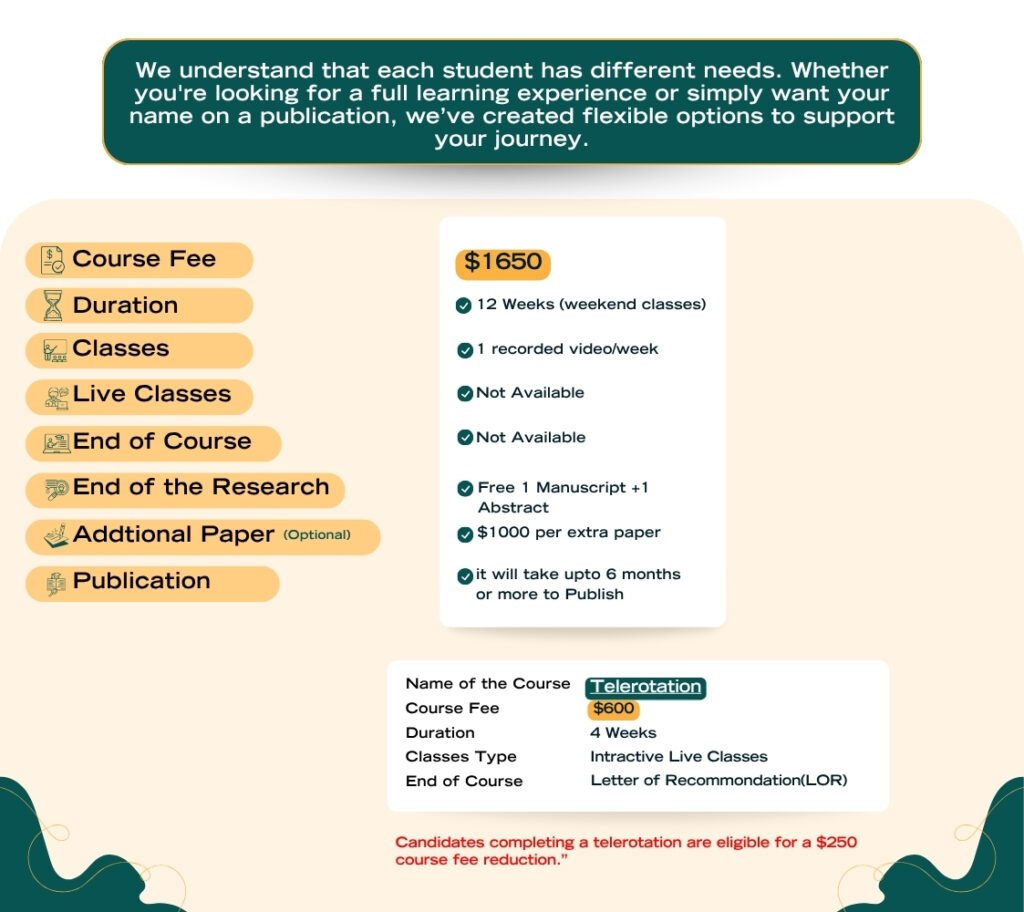
MD RESEARCH Updated Pricing Options
We understand that each student has different needs. Whether you’re looking for a full learning experience to publication or simply work for your research to have your name on a publication, we’ve created flexible options to support your journey.
Residency Preparation: The Essential Steps to Start a Strong Residency Journey
Program Fee: $600
1st Week: History Taking & Clinical Examination
Subtopics:
- Principles of Effective History Taking:
- How to do Patient-centered communication typical of American Medicine.
- Building rapport and trust to get most information.
- Structuring the interview: Chief complaint, history of present illness, past medical history, family history, social history, and review of systems.
- Handling sensitive topics with professionalism based on American Guidelines.
- Techniques of History Taking:
- Open-ended vs. closed-ended questions.
- Listening and observing non-verbal cues.
- Usinging medical terminology.
- Introduction to Clinical Examination:
- General physical examination principles.
- Systematic examination approach: Head-to-toe and focused examinations.
- Recognizing normal vs. abnormal findings.
- Hands-on Practice:
- Practicing with Virtual Patient.
- Immediate feedback on communication and examination techniques that will also help in CK (USMLE II).
2nd Week: Bedside and Clinical Case Presentation
Subtopics:
- Structure of a Clinical Case Presentation:
- Patient demographics and chief complaint.
- Summary of history and clinical findings.
- Differential diagnoses.
- Investigations and management plan.
- Effective Presentation Skills:
- Clarity and conciseness.
- Engaging and logical flow.
- Use of visual aids and handouts.
- Understanding Bedside Manners:
- Interacting with patients during rounds.
- Presenting findings with empathy and professionalism.
- Team Collaboration:
- Encouraging discussion and input from team members.
- Addressing questions and feedback during presentations.
3rd Week: Journal Club Presentation- A Must with First Year Residents.
Subtopics:
- Purpose and Importance of a Journal Club:
- Staying updated with the latest medical research.
- Critical appraisal of research articles.
- Enhancing evidence-based practice skills.
- Steps to Prepare for a Journal Club:
- Selecting relevant and high-quality articles.
- Summarizing key findings and methodology.
- Identifying strengths, weaknesses, and implications of the study.
- Presentation Techniques:
- Structuring the presentation: Background, methods, results, discussion, and conclusion.
- Engaging the audience with discussion questions.
- Critiquing and Feedback:
- Constructively critiquing peers’ presentations.
- Incorporating feedback for improvement.
4th Week: Writing Patient Notes – At Bedside & in Clinic
Subtopics:
- Components of a Patient Note:
- Subjective: Patient’s complaints and history.
- Objective: Clinical findings and investigations.
- Assessment: Diagnosis and differential diagnoses.
- Plan: Treatment and follow-up plan.
- Documentation Best Practices:
- Maintaining accuracy and clarity.
- Avoiding biases and ensuring professionalism.
- Abiding by legal and ethical standards in documentation.
- Integrating Bedside Observations:
- Translating clinical examination findings into written notes.
- Using templates and tools like SOAP (Subjective, Objective, Assessment, Plan).
- Practice Sessions:
- Writing notes in real-time during bedside visits.
- Reviewing and refining notes with faculty feedback.
Your Path to a Strong U.S. Residency Application Starts Here
Don’t miss out on cutting-edge research updates, join our WhatsApp group today!
Get in touch with mdresearch team to start your Residency journey!
- contact@mdresearch.us
Don’t miss out on cutting-edge research updates, join our WhatsApp group today!
Get in touch with mdresearch team to start your Residency journey!
Get in touch with us on WhatsApp at +91 99402 81344 or email at contact@mdresearch.us
- contact@mdresearch.us