Programs That Sponsor J-1 and H-1B Visas: How Visa Sponsorship Shapes Your Residency List
For international medical graduates (IMGs), visa sponsorship is one of the first filters on your residency program list. Your scores, clinical experience, and letters only matter if a program can legally train you. Understanding J-1 vs H-1B visa for residency decides which programs you apply to, how you rank them, and what your career looks like after training.
J-1 vs H-1B: The Key Differences
Who Sponsors You
J-1 visa sponsorship for clinical training comes through the Educational Commission for Foreign Medical Graduates (ECFMG), not the hospital. That makes the J-1 simple and inexpensive for programs. The H-1B, by contrast, is sponsored directly by the hiring hospital or health system, which takes on the legal paperwork and cost.
How Many Programs Accept Each
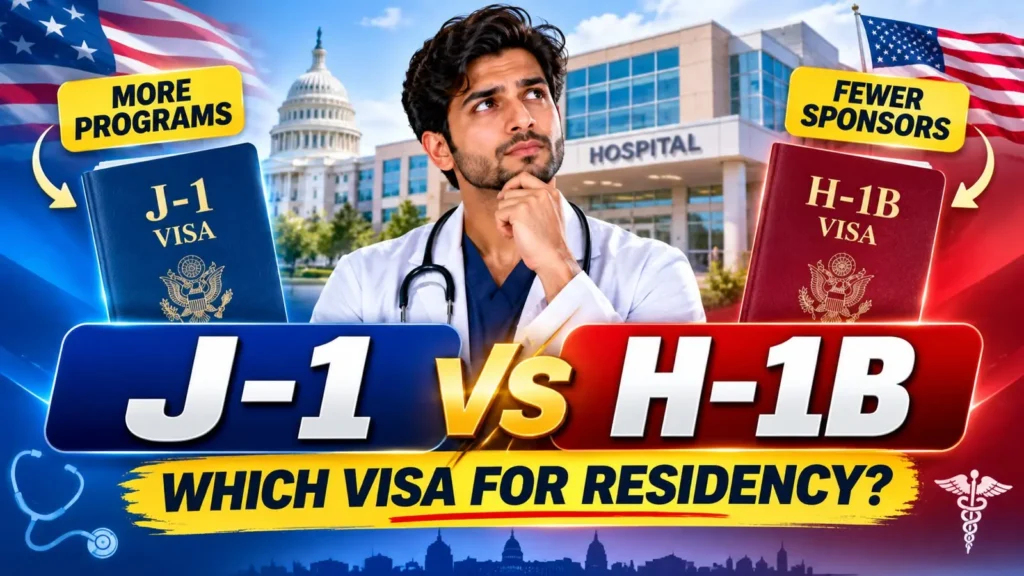
Most ACGME-accredited residency and fellowship programs accept J-1 physicians. Far fewer H-1B residency programs exist, because of legal costs, institutional policy, and exam requirements. Programs that sponsor H-1B visas usually require you to pass USMLE Step 3 before the petition is filed, which affects your timeline.
The Two-Year Home Residency Requirement
Most J-1 physicians face the two-year home residency requirement: after training, you must spend two years in your home country before you can get an H-1B or green card, unless you obtain a J-1 waiver. The H-1B has no such rule and allows dual intent, so you can pursue permanent residency while training.
Duration and Flexibility
The H-1B allows up to six years total, and changing employers requires a new petition. Long residencies plus fellowship can use up most of those six years. J-1 clinical training is tied to your program length, generally up to seven years.
The H-1B Fee: Check the Latest Rules
A September 2025 proclamation added a $100,000 fee to certain new H-1B petitions, mainly for applicants outside the US. Federal courts have since blocked the fee, but litigation is ongoing. Rules may change before Match Day, so confirm current USCIS guidance and ask each program directly whether it is sponsoring H-1Bs this cycle.
How Visa Sponsorship Affects Your Residency Program List
1. Filter Out Non-Sponsors Early
Remove programs that don’t sponsor the visa you need before you spend money on applications. Use FREIDA, program websites, and direct emails to program coordinators to confirm visa sponsorship for IMGs. Policies change year to year, so verify for the current cycle.
2. Build Separate “J-1 Only” and “H-1B Friendly” Targets
Because most programs accept J-1s, that pool will be larger. Keep a broad base of J-1 eligible programs to protect your Match chances, then add H-1B sponsors if avoiding the two-year rule matters for your long-term plans. Don’t build a list made only of H-1B programs unless your application is very strong.
3. Account for Prerequisites and Timing
If you want H-1B programs, plan to finish Step 3 well before rank list deadlines. Many programs won’t rank you for an H-1B without a passing score. Note that most university-affiliated and nonprofit teaching hospitals are cap-exempt, so their residents skip the H-1B lottery, while some community or for-profit employers may be cap-subject. For the full calendar, see the Residency Match Timeline 2027.
4. Plan Around Post-Training Transitions
If you train on a J-1, map out your waiver path early. The Conrad 30 program lets each state sponsor up to 30 J-1 physicians a year to work in underserved areas, usually for three years on an H-1B. Federal agency waiver programs offer other options. Conrad 30 depends on periodic reauthorization by Congress, so track its status.
5. Rank Strategically
Visa type should shape your rank order list, not just your application list. A program offering an H-1B may be worth ranking higher if you plan to stay in the US long term, while a strong J-1 program in your target specialty may serve you better for fellowship opportunities.
Frequently Asked Questions
Is the J-1 or H-1B better for residency?
Neither is better for everyone. The J-1 offers access to far more programs; the H-1B offers a smoother path to staying in the US.
Can I switch from J-1 to H-1B during residency?
Usually not without a waiver of the two-year home residency requirement, which is typically obtained after training.
Do all programs list their visa policy?
Not always. Email the program coordinator to confirm before applying.
For more questions on applying through the Match, see the MD Research FAQ.
Final Thoughts
The J-1 vs H-1B visa for residency decision isn’t a detail to sort out after the Match. It shapes your entire residency program list and your career after training. Filter early, balance J-1 and H-1B targets, plan around Step 3, and know your waiver options. Most importantly, verify every program’s current policy, because immigration rules can shift quickly.
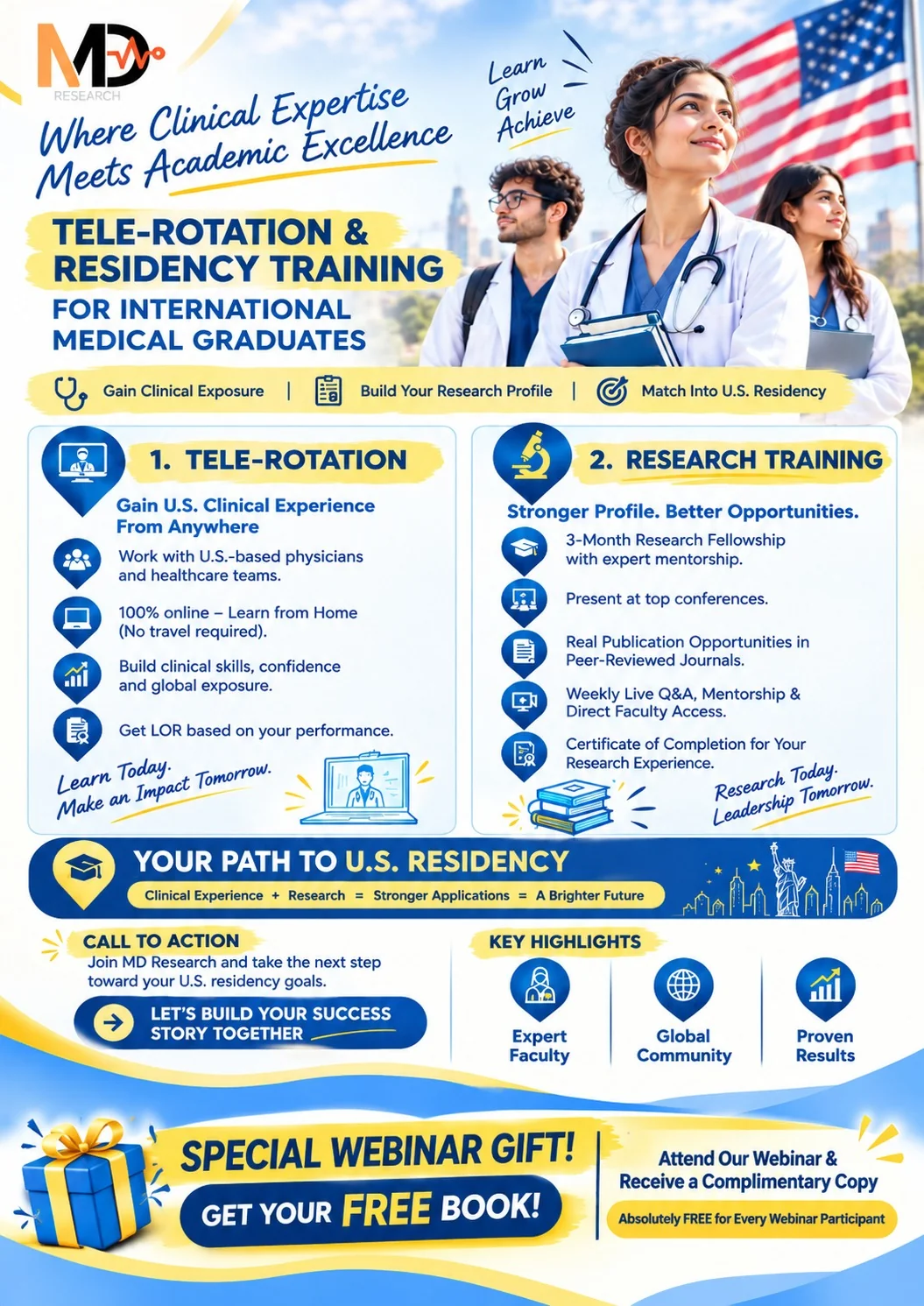
If you are preparing your application alongside this list, MD Research’s Research Training Program is one place to build that foundation.