How US Clinical Experience, Observerships, and LORs Help IMGs Get Residency Interviews
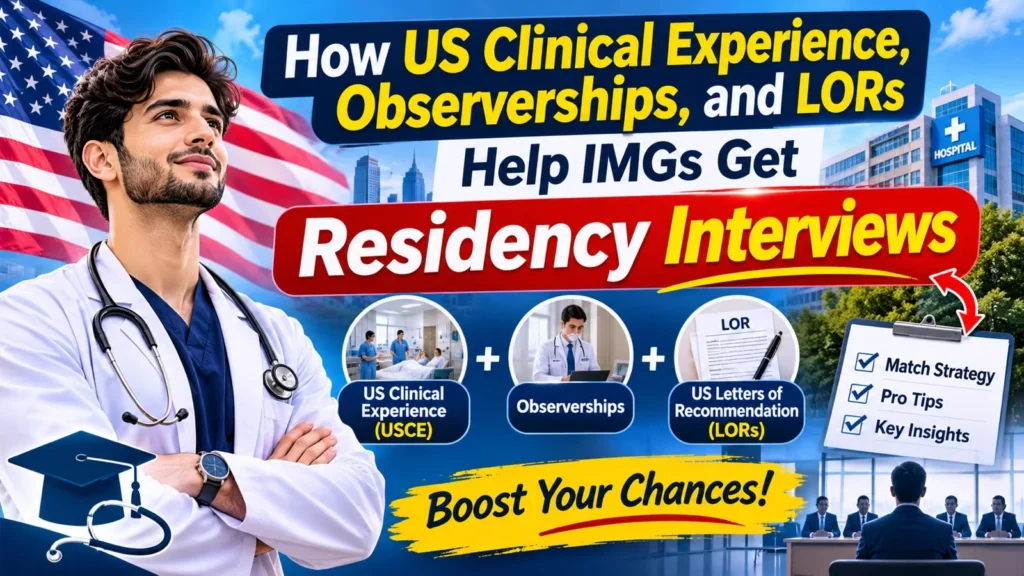
For international medical graduates (IMGs), strong USMLE scores open the door, but they rarely get you through it. Program directors reviewing your ERAS application want proof that you can work safely and effectively inside the US healthcare system. Three things show that best: US clinical experience for IMGs, observerships, and strong US letters of recommendation. Together, they often decide whether you get residency interview invites or get filtered out.
Why USMLE Scores Alone Aren’t Enough
USMLE scores measure medical knowledge. They don’t show how you communicate with a US care team, present on rounds, or handle patient expectations here. Program directors take a chance on every IMG they interview, so they look for evidence that lowers that risk. USCE, observerships, and US LORs show clinical readiness, teamwork, and fit, which test scores cannot.
US Clinical Experience (USCE): The Strongest Signal
Hands-on USCE, meaning clinical electives (for current students), sub-internships, and externships, carries the most weight because you take part in patient care under supervision. Here’s why it matters for your Match strategy:
- It meets program criteria. Many residency programs require or strongly prefer recent USCE before offering interviews.
- It shows system readiness. USCE proves you understand US hospital workflows, communication norms, and clinical reasoning.
- It strengthens interviews. Real patient encounters and team experiences give you concrete stories instead of generic answers.
- Setting matters. Rotations at academic or university-affiliated hospitals, especially inpatient ones, are generally viewed more favorably than private clinics or purely outpatient settings.
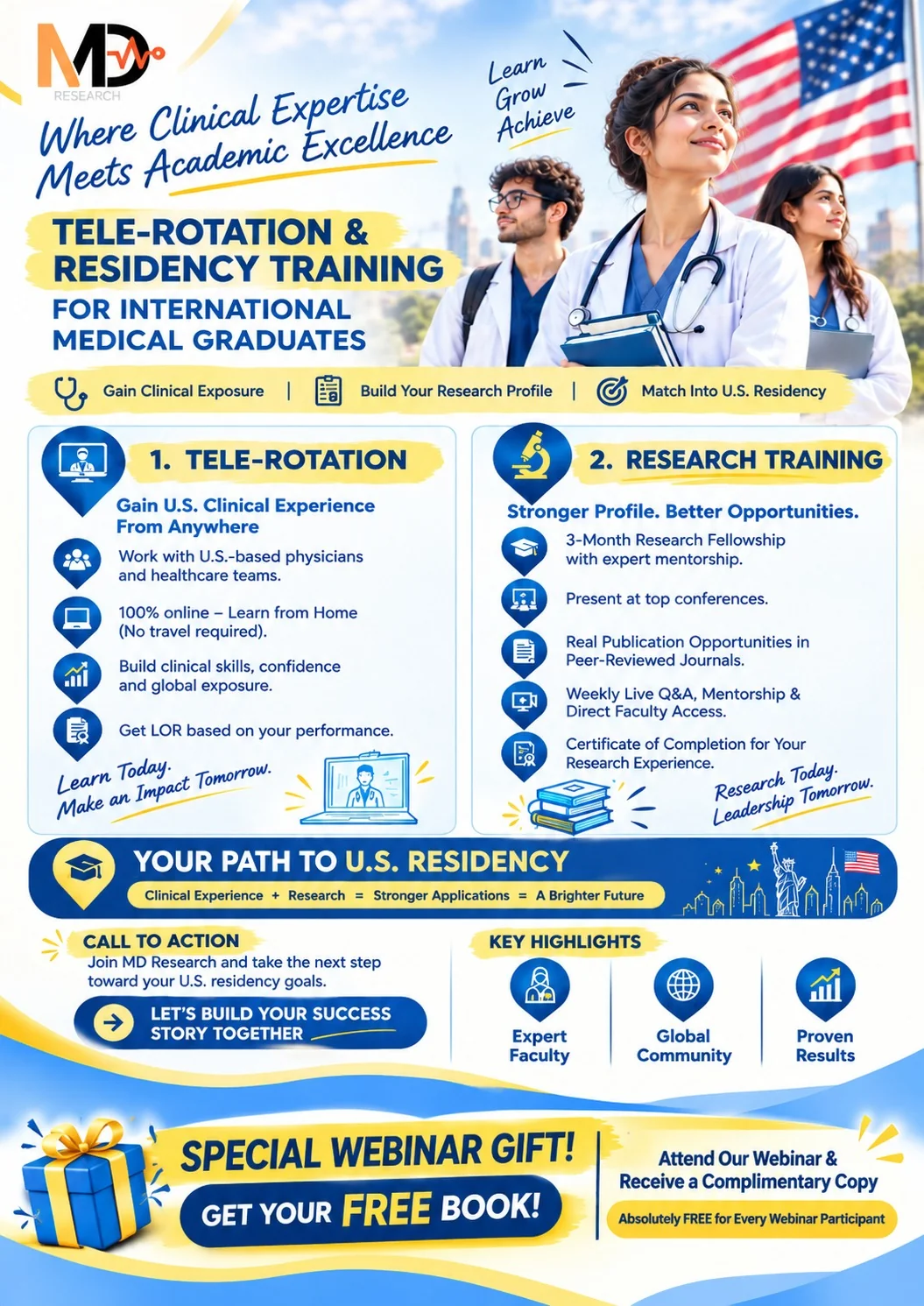
If you can secure only one experience, choose hands-on USCE at a teaching hospital in your target specialty. If hands-on rotations are hard to find, MD Research’s telerotation program offers clinical learning and mentorship aimed at US residency preparation.
Observerships for IMGs: Useful, But Know Their Limits
Observerships are shadowing experiences: you watch care being delivered but don’t treat patients. Because some programs don’t count them as true hands-on USCE, they usually rank below electives and externships. Still, observerships have real value:
- They help when hands-on options are limited, especially for graduates facing legal, visa, or institutional barriers.
- They prevent CV gaps and show ongoing commitment to training in the US.
- They build familiarity and networks. You see US practice styles, attend conferences, and meet physicians and residents who may later support your application.
Treat an observership as a stepping stone, not a substitute. Use it to build relationships that lead to letters and hands-on rotations. If you’re also building a research profile, this guide to research experience for residency explains how IMGs can stand out.
Letters of Recommendation for Residency: Often the Deciding Factor
US LORs are among the most influential parts of an IMG residency application because they come from physicians program directors know and trust. Strong letters:
- Provide outside validation of your work ethic, professionalism, clinical reasoning, and teamwork.
- Influence screening. Programs look for recent US letters, often one to three or more per specialty, that speak to your performance in a US setting.
- Carry more weight from the right writers. Letters from program directors, associate program directors, or attendings who work closely with residents, with specific examples, beat generic praise.
- Must be accurate. Your writer should state your role correctly (observer vs. hands-on) and describe only what they directly saw. An overstated letter can conflict with your ERAS entries and damage your credibility.
Structured research training can also build a track record that supports a letter. The MD Research Research Training Program is a 12-week online course covering research methodology, biostatistics, systematic reviews, and scientific writing, though publication is not guaranteed.
Practical Tips to Maximize Interview Invites
- Keep it recent. Many programs screen for USCE within the past one to two years. Check the Residency Match Timeline 2027 and the 2027 ERAS application updates for IMGs so your experience lines up with the cycle.
- Match your specialty. Rotate, and get letters, in the specialty you’re applying to. If you’re considering a highly competitive field, read about competitive specialties for IMGs first.
- Ask early. Request letters at the end of a strong rotation, while your performance is fresh.
- Make it easy for writers. Share your CV, personal statement draft, and cases you handled together.
- Stay consistent. Your ERAS entries, personal statement, and letters should describe the same roles.
Frequently Asked Questions
Do observerships count as USCE?
Some programs accept them; many don’t count them as hands-on USCE. Check each program’s requirements.
How many US letters do IMGs need?
Most competitive IMG applicants aim for at least two or three US letters in their target specialty.
Final Thoughts
For IMGs, residency interviews are earned through proof, not just scores. Prioritize hands-on US clinical experience, use observerships strategically, and build relationships that produce detailed, accurate letters. Get those right and your application tells program directors what they most want to hear: this candidate is ready to work in a US hospital from day one.
For more guidance, visit MD Research US or browse the MD Research blog.