
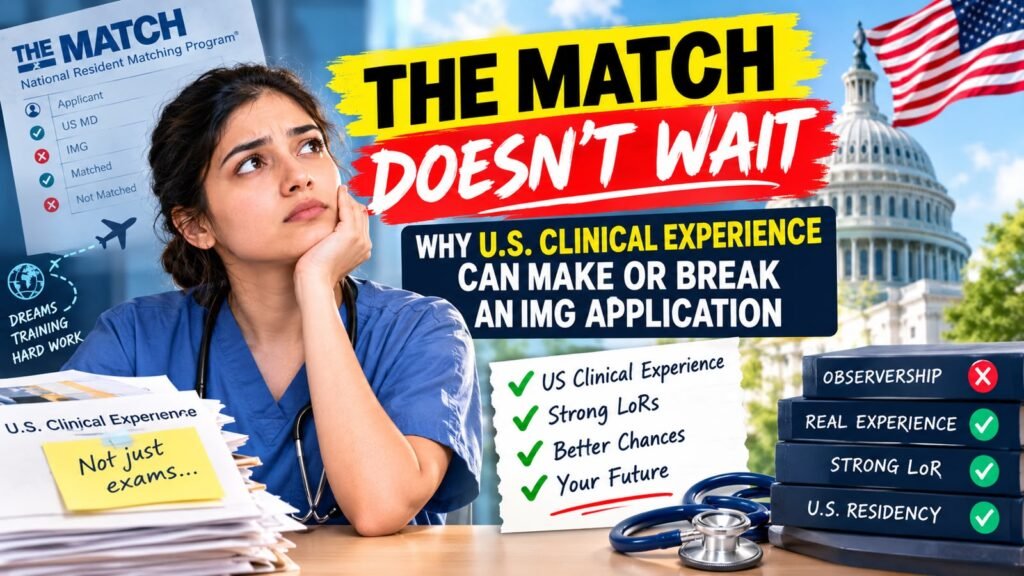
The Match Doesn't Wait: Why U.S. Clinical Experience Can Make or Break an IMG Application
Every year, thousands of international medical graduates (IMGs) enter the U.S. residency Match with strong exam scores and years of training behind them. A large share still go home without a position. The difference often comes down to two things: hands-on U.S. clinical experience (USCE) and credible American letters of recommendation (LoRs).
The Numbers Are Sobering
According to NRMP data, U.S. MD seniors match at rates above 90% in recent cycles. Non-U.S. citizen IMGs have matched at roughly 58-60%. That means about four in ten applicants in this group do not match, even though they paid the fees, sat the exams, and submitted full applications.
The competition is not shrinking. ECFMG-certified applicants keep growing in number, while residency positions grow slowly. Program directors can afford to be selective, and they use filters to narrow thousands of applications to a manageable pile.
What Program Directors Are Looking For
The NRMP’s Program Director Survey consistently shows that program directors value LoRs, especially specialty-specific ones, and want evidence that an applicant can function in the U.S. healthcare system. Many programs set explicit USCE requirements, such as clinical experience completed within the last one to three years. An application without recent USCE can be screened out before anyone reads the personal statement.
The reason is practical. Residency is about running a service, not just passing exams. Programs want confidence that you can handle electronic medical records, present patients in a U.S. format, communicate with patients and teams, and understand how care is delivered here. USCE is the evidence for that.
Not All Experience Is Equal
Many applicants lose time on the wrong kind of rotation. Passive observerships, where you shadow without examining patients or documenting, rarely produce the detailed, specific letters programs value. A generic letter that says you were “punctual and respectful” carries little weight.
Hands-on experience is different. When you carry patients, write notes, track lab trends, and present on rounds, your supervisor sees your clinical thinking. That is what makes a letter specific and persuasive. Setting matters too: letters from faculty at teaching hospitals or programs with active residency tracks tend to carry the most credibility.
The Clock Is Your Biggest Risk
Placement takes time, and a strong letter takes weeks of working relationship to earn. Applicants who start late often discover that the rotation they wanted is full, that onboarding paperwork takes longer than expected, or that their letters won’t arrive before ERAS deadlines. Waiting until you feel “ready” often costs a full application cycle, and a gap year adds to the story program directors may read as a red flag.
How to Turn USCE Into Strong Letters
Preparation turns a rotation into a letter:
- Own your patients. Review labs before rounds and prepare a differential diagnosis for each case.
- Ask for feedback early. Around the end of week two, ask your attending what you can improve. It shows coachability.
- Ask the right question. Instead of “Can you write me a letter?”, ask: “Do you feel you know my clinical work well enough to write a strong, positive letter of recommendation?” This gives the preceptor an honest way to decline and protects you from a lukewarm letter.
- Make the writer’s job easy. Provide your CV, personal statement draft, a short summary of cases you managed together, and your ERAS request form with viewing rights waived
The Bottom Line
The Match rewards applicants who prepare early and strategically. Hands-on USCE and strong American LoRs are not a bonus. For many IMGs, they are the entry ticket. Every month spent waiting is a month a competitor spends building the relationships and experience you will need.
If you are planning for the next cycle, the best time to secure your rotation was yesterday, and the second-best time is today. Explore your placement options and enroll now, while spots and timelines still work in your favor.